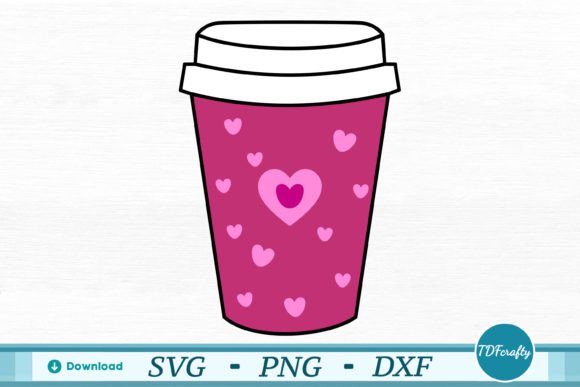
Coffee Cup with Hearts
First Impressions: Sweet, Simple, and Surprisingly Versatile
When I opened Coffee Cup with Hearts for the first time, I didn’t see just another cute graphic—I saw a quiet moment of warmth. The illustration balances soft curves and gentle negative space, with hearts nestled along the steam and cup handle like little affirmations. It’s not fussy or over-rendered; it leans into charm without sacrificing clarity. That matters—especially when translating from screen to stitch. As an embroidery designer who’s stitched hundreds of café-themed motifs, I immediately pictured this on a linen tea towel for a local boutique, or as a subtle chest emblem on a baby onesie. It feels handmade in spirit, even before the needle touches fabric.
Real Project Test: Embroidering a Linen Tote for a Local Coffee Roaster
Last week, I used Coffee Cup with Hearts to embroider a set of 12 linen tote bags for a small-batch roaster launching a “Love Your Local Brew” campaign. We chose medium-weight natural linen—textured but stable—and paired it with matte cotton thread in warm taupe and brick red. The design held up beautifully: the satin stitch on the cup rim stayed crisp, the heart outlines remained legible at 3.2 inches wide, and the open steam area avoided dense fill that could stiffen the fabric. Customers responded instantly—not just to the coffee theme, but to how *light* the embroidery felt. No bulk, no shadowing, no puckering. That’s the difference between a decorative graphic and a thoughtful embroidery file.
Where It Shines (and Where to Pause)
Coffee Cup with Hearts excels in projects where approachability and authenticity matter:
- Custom apparel: Works cleanly on crewneck sweatshirts and relaxed-fit tees—especially when placed off-center or on the sleeve.
- Personalized gifts: Ideal for baby embroidery (think onesies or burp cloths) and holiday embroidery (mugs, pillow covers, kitchen towels).
- Small shop product: Fits seamlessly into boutique branding—think aprons for cafés, embroidered patches for craft fair vendors, or cap fronts for indie bakeries.
- Digital embroidery file use: Its clean vector structure (SVG, PNG, DXF) makes it easy to resize for printable mockups or digital product previews—no pixelation, no jagged edges.
But be mindful in these situations:
- Small hoop sizes: At under 2.5 inches wide, it fits most standard hoops—but check your machine’s minimum recommended size before committing to a tiny cap front.
- Textured or stretchy fabric: On terry cloth towels or lightweight knits, use cutaway stabilizer and reduce stitch density slightly—those delicate heart curves can blur if tension isn’t balanced.
- Dark fabric: The design’s open layout means thread color contrast is critical. Test black thread on navy twill—it reads well, but light gray on charcoal needs extra density to avoid fading into the background.
- Curved surfaces: Caps and hats require careful hooping. I’d suggest simplifying the steam line to a single running stitch if stitching on a structured front panel.
Design Judgment: Beyond Aesthetics
What elevates Coffee Cup with Hearts isn’t just its visual appeal—it’s how it supports your credibility as a maker. When customers see this on a finished product, they don’t just register “coffee.” They register care: the intentional spacing, the absence of filler clutter, the way the hearts echo the cup’s warmth instead of competing with it. That builds trust—especially for Etsy sellers and craft business owners whose buyers choose handmade for emotional resonance, not just utility.
It also plays well across contexts. As an applique design, it layers cleanly over denim or canvas. As a standalone machine embroidery design, its balanced stitch density avoids stiffness on baby embroidery or nursery decor. And because it’s rooted in Illustrations rather than photorealism, it scales gracefully—from a 1.8-inch patch on a backpack to a 4.5-inch tote bag focal point.
Practical Designer Notes Before You Stitch
Before adding Coffee Cup with Hearts to your next project, here’s what I always do:
- Test on scrap fabric—same weight and weave as your final piece. Linen behaves differently than cotton poplin, and both react uniquely to satin stitch.
- Review stitch density in your embroidery software. If it’s above 12,000 stitches, consider lightening fill areas—especially in the steam curl.
- Confirm hoop size compatibility. This design fits comfortably in a 4×4 hoop, but double-check your machine’s limits if using older models.
- Inspect small details at 200% zoom: Are heart points sharp? Does the cup handle taper cleanly? These translate directly to stitch accuracy.
- Test black-and-white mockups—not just for contrast, but to assess silhouette strength. This design holds up well in monochrome, which expands its use for branding or minimalist shops.
- Use proper stabilizer: Tear-away for stable wovens, cutaway for knits or textured fabrics. Skip the fusible unless you’re layering appliqué.
- Verify licensing before selling finished items or reselling the digital embroidery file. Since it’s labeled as Graphics and tested in Cricut Design Space, confirm whether commercial use is included—don’t assume.
Final Thought: A Quiet Workhorse, Not a Flashy Gimmick
Coffee Cup with Hearts won’t shout. It doesn’t need to. In a market saturated with overdesigned, overcomplicated motifs, its restraint is its strength. It supports your voice—not drowns it. Whether you’re stitching for a wedding gift, stocking a craft fair booth, or building a cohesive line of embroidered kitchen goods, this design earns its place in your library by delivering consistent, confident results. It’s the kind of design asset that quietly lifts the perceived value of your handmade product—because good embroidery isn’t about how much you stitch, but how thoughtfully you choose what to stitch.