Coffee Cup Vintage Logo Template
First Impression: Warm, Nostalgic, and Ready for Stitching
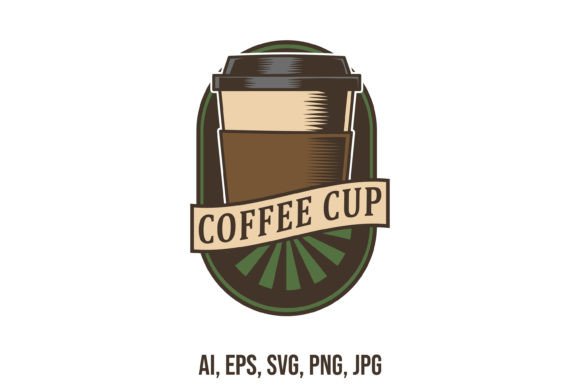
When I opened the Coffee Cup Vintage Logo Template, what struck me first wasn’t just the charm—it was the clarity. This isn’t a cluttered illustration or an over-rendered vector; it’s a clean, intentional logo with balanced negative space, subtle texture cues, and a hand-drawn warmth that reads as authentic—not AI-generated or overly polished. The cup sits centered, slightly tilted, with soft steam curls and a minimal “roasted” or “cafe” wordmark (depending on version) in a tasteful serif or condensed sans-serif. It feels like something you’d find stamped on a burlap coffee sack from the 1940s—friendly, grounded, and quietly confident.
A Real Project Test: Embroidering a Linen Tote for a Local Café Pop-Up
Last week, I used the Coffee Cup Vintage Logo Template to embroider a set of heavyweight linen tote bags for a neighborhood café’s weekend market stall. I chose a medium hoop size and paired it with tear-away stabilizer and 40-weight cotton thread in deep espresso and cream. The result? Crisp satin-stitched outlines, smooth fill-stitched cup body, and legible lettering—even at 3.5 inches wide. Customers paused, smiled, and asked where the design came from. That’s the quiet power of this template: it doesn’t shout. It invites.
Where It Shines—and Where It Needs Thought
The Coffee Cup Vintage Logo Template excels in projects where authenticity and approachability matter most: embroidered aprons for small-batch roasters, baby onesies with minimalist coffee motifs, tea towel monograms for kitchen boutiques, and custom patches for barista uniforms. Its moderate detail level—no ultra-thin lines or micro-lettering—translates reliably across fabric types. On sweatshirts? Yes—especially with light stabilizing. On stretchy jersey tees? Use cut-away stabilizer and reduce stitch density slightly to avoid puckering.
That said, tread carefully on curved surfaces like baseball caps—the cup’s rounded base and steam swirl can distort if hooped too tightly. On dark fabrics, test contrast early: some versions include outline-only variants (great for topstitching), while others rely on fill density for impact. And on thin fabrics like cotton voile or baby swaddle cloth, skip dense fill stitches entirely—opt instead for a running-stitch interpretation or combine with appliqué for dimension.
Design Integrity in the Finished Product
What sets the Coffee Cup Vintage Logo Template apart isn’t just aesthetics—it’s how it holds up *after* stitching. Unlike busier vintage-style graphics, this one avoids visual noise. No competing icons, no layered shadows, no unnecessary flourishes. That means cleaner registration, fewer thread breaks during long runs, and consistent results across machines—from home embroidery units to commercial multi-head setups.
For Etsy sellers and craft fair vendors, that consistency builds trust. A customer who buys a pillow cover today expects the same warmth and clarity on tomorrow’s holiday mug cozy. For small shop owners branding their own merchandise, the template supports cohesion without rigidity—it works solo on a patch or paired with a simple tagline (“Brewed Daily” or “Good Things Take Time”) without crowding.
Practical Notes Every Embroidery Designer Should Check
- Test on scrap fabric first—especially with textured weaves like burlap or terry cloth, where stitch definition can blur.
- Review stitch density before scaling beyond 4 inches; tighter fills may overwhelm lightweight fabrics.
- Confirm hoop size compatibility: the original layout fits comfortably in a 4×4 hoop, but verify file dimensions in your editing software.
- Inspect small details—like steam curl endpoints and letter spacing—before finalizing for baby embroidery or fine-gift applications.
- Try black-and-white mockups to assess value contrast, especially when planning for both light and dark apparel.
- Match stabilizer to fabric weight and use case: cut-away for knits, tear-away for stable wovens, fusible for delicate linens.
- Verify licensing before selling finished products or bundling the Coffee Cup Vintage Logo Template into digital embroidery kits—this is a Graphics asset, not automatically cleared for resale.
Beyond the Stitch: Branding, Gifting, and Craft Business Reality
I’ve seen too many craft businesses choose “cute” over *cohesive*. The Coffee Cup Vintage Logo Template avoids that trap. It’s versatile enough for a wedding favor (embroidered on muslin coffee bags) yet professional enough for a boutique’s permanent signage (digitized as a sew-on patch). Its vintage tone doesn’t feel dated—it feels *considered*. That nuance matters when customers scroll past dozens of Etsy listings or browse a holiday craft fair. They don’t buy a coffee cup. They buy warmth, ritual, intention.
For handmade product creators, this template bridges function and feeling: it reads clearly on a kitchen towel but still carries personality on a child’s backpack. For apparel decorators, it scales well across sizes without losing character—unlike overly intricate designs that dissolve into fuzz on larger garments.
A Final Word for Makers Who Value Craft Over Clutter
If you’re choosing a machine embroidery design for real-world use—not just as a digital file on a hard drive—you want reliability, adaptability, and emotional resonance. The Coffee Cup Vintage Logo Template delivers all three. It’s not flashy. It doesn’t try to be everything. But in a crowded Crafts category full of generic clipart and over-processed vectors, its quiet confidence makes it stand out—thread by thread, stitch by stitch, product by product.